The Human Element: Why Sacramento Has Forgotten the Real History of Bail
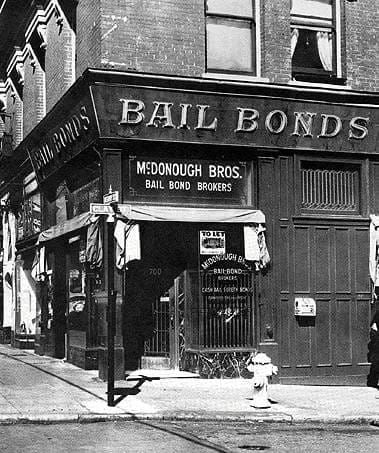
There is a deep historical irony playing out in California’s state capitol. For years, Sacramento has been the epicenter of a national legislative push to dismantle the commercial bail system, replacing it with cold, automated computer algorithms and taxpayer-funded government bureaucracies. The lawmakers pushing these agendas claim they are inventing a fairer, more progressive future. But they are suffering from a massive case of historical amnesia, and it is time we remind California and America exactly who we are, where this industry comes from, and why its deep roots are so vital to the American justice system. What happens legislatively in California inevitably affects bail nationally. Our state acts as the policy sandbox for the rest of the country, which makes it even more critical that our lawmakers understand our true identity. The truth is, the commercial bail industry wasn't created by Wall Street, nor was it designed as an abstract corporate afterthought. We were born out of a desire for equity, right here in California, over a century ago, by two brothers who wanted to give working-class people a fighting chance against a rigid legal system.
The parallels between 1898 and today are striking, proving that the core human struggles within our justice system haven't changed, yet modern legislators are entirely misreading them. Go back to 1898. In San Francisco, two brothers named Peter and Thomas McDonough ran a saloon at the corner of Kearny and Clay Streets, directly across from the old Hall of Justice. Day after day, they watched regular working guys, dock workers, laborers, and neighborhood patrons, get picked up for minor infractions. Under the government's rules, if you had cash, you paid the court and went home to your family. If you were poor, you sat in a dark cell, lost your job, and watched your life unravel while waiting for trial. Just like today, the wealthy could easily buy their immediate freedom, while lower-income citizens were trapped behind bars not because of their risk, but because of their lack of liquid wealth.
The McDonough brothers saw this glaring injustice and stepped into the gap. They began putting up their own property and funds to guarantee the full bond amount for their patrons in exchange for a small, non-refundable fee. They didn't just hand over money, they used their local knowledge, community trust, and personal relationships to ensure those men showed up for court. With that simple, human-driven framework, the world’s first commercial bail bond agency was born, serving as the ultimate equalizer for families without deep pockets. Today's legislators look at this system and see a financial transaction that exploits the poor, completely forgetting that the entire industry was invented precisely to rescue the poor from permanent state detention. When lawmakers pass bills aimed at abolishing commercial bail in favor of government-run, automated assessments, they think they are correcting an old flaw. In reality, they are making the exact same mistake the state was making back in 1898, leaving people to languish under rigid, slow-moving bureaucratic processes while their livelihoods vanish.
Then and now, the true magic of the system wasn't the cash itself, it was the personal accountability. In 1898, the McDonoughs knew who was reliable, who had a family to feed, and who just needed a trusted advocate to hold them to their word. Today, we are doing it even better. In my company, we have revolutionized how bail is written, elevating the trade into a sophisticated practice of risk management and community support. We are better than most because we don't just write a bond and walk away, we wrap individuals in an intentional system of accountability that consistently outperforms any government agency. By trying to replace this human judgment with algorithmic risk-assessment tools, modern legislators miss the entire race against the clock.
When a working-class American is arrested today, the exact same crisis unfolds as it did in 1898, a 48-hour destruction window opens. Forty-eight hours in a jail cell isn't an inconvenience, it’s a catastrophe. It is the exact amount of time it takes to get fired for a "no-call, no-show," to fall behind on rent, or to lose custody of a child. While an algorithm bounces back and forth and a government bureaucrat waits for data fields to populate, a person’s entire livelihood is ticking away. A spreadsheet can’t look into the eyes of a mother who is willing to put her own signature on the line to keep her son on the right track. A computer program can’t measure sentimental equity, the intangible bonds of family, loyalty, and community that actually motivate a person to face their day in court. True underwriting is a dynamic conversation, not a static calculation. In my line of work, we identify the human anchors, the mothers, spouses, and employers, and insulate the defendant in a supportive network of accountability. By taking a calculated, relationship-based risk, my company secures a person's release in hours rather than days. That speed is what saves jobs, just as it did over a century ago on the San Francisco docks.
The biggest piece of misinformation shared by critics is the idea that the private bail system is a drain on public resources. The absolute reality is that commercial bail costs the local communities we serve absolutely nothing, a fact that is entirely ignored in the public debate. When an agency like mine writes a bond, the community pays zero. There is no local tax levied, no public budget adjusted, and no county resource drained to secure that release or manage that risk.
When we take on a client, 100% of the operational and financial risk shifts away from the public ledger. If a defendant flees, the local community isn't on the hook for the cost of the recovery, we handle it at our own expense. Conversely, when the state takes over pretrial release, it builds slow, bloated public bureaucracies funded entirely by hard-working citizens, leaving local taxpayers with the bill for tracking, technology, and administration. Commercial bail keeps the system moving while protecting the community's wallet with zero tax dollars required.
Pretrial liberty is a cornerstone of American constitutional law, and commercial bail has been a vital part of America's history since the very start. The founders who drafted the Judiciary Act of 1789 explicitly established bail as a matter of right because they wanted to protect citizens from arbitrary state detention. For centuries, our legal system has relied on private sureties to stand between the citizen and the jail cell. If our lawmakers want to fix the pretrial system, they need to stop looking at experimental code and start looking at their own history. The problems of 1898, government delays, unequal access to freedom, and the devastating speed at which a regular person's life can be ruined by pretrial detention, are the exact same problems we face today. A system that partners with private entities to guarantee court appearances isn't a flaw in the machine, it is a vital check against unchecked state power. It’s time for legislators to remember the people they are actually supposed to serve, abandon the cold failure of algorithmic justice, and respect the deep California roots that have kept American families intact for over a century.